The Art of Japanese: Where Language Paints Meaning
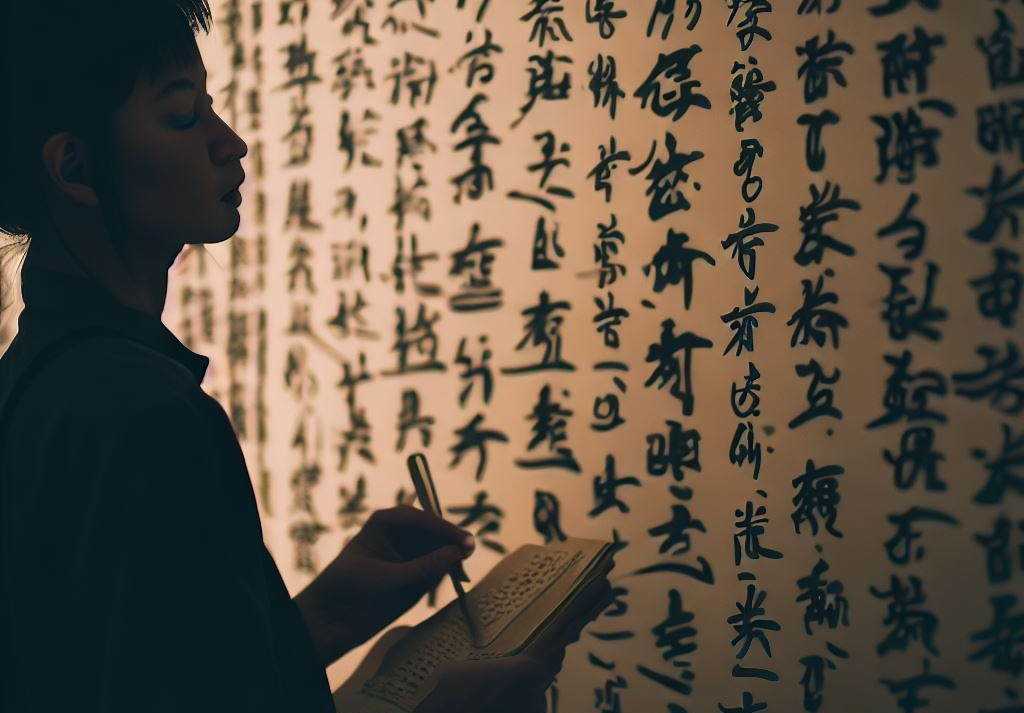
Konnichiwa, friends.
Today, I want to share something deeply personal, not just about learning a language, but about falling in love with a way of thinking.
I’ve studied three other languages before Japanese. French for its romance, Spanish for its rhythm, German for its precision. But none of them… none of them made me pause mid-sentence and whisper, “Wait, how did they think this?”
Japanese didn’t just teach me new words. It taught me to see differently.
Writing as Art, Not Just Communication
Let’s start with the characters.
Hiragana flows like ink on silk, soft, curved, alive. Katakana is sharp, deliberate, almost architectural. And kanji? Kanji feels like holding a piece of history in your hand.
Take the katakana フ (fu). Look closely. Doesn’t it look like an open mouth? A breath forming a sound? That’s not coincidence, it’s design. Every stroke was chosen not just for function, but for meaning. In most languages, letters are abstract symbols. In Japanese, they’re tiny paintings.
And when you learn to write them? You don’t just memorize shapes. You trace centuries of thought.
I used to think calligraphy was just beautiful handwriting. Now I understand: it’s meditation in motion.
Kanji: The Logic of Layers
Here’s where my engineering mind fell head over heels.
In Japanese, words aren’t built from random letters, they’re constructed, like circuits or Lego bricks.
Take the word for “train station”: 駅 (eki).
- 馬 (uma) = horse
- 又 (mata) = again, or “to cross”
- 二 (ni) = two
Wait… horses? Two? What?
Actually, 駅 originally meant a place where riders would change horses along ancient routes. Over time, it evolved into “station”, but the meaning still lingers beneath the surface.
This is what makes kanji magical: each character carries a story, and when combined, they create layered meanings that English often needs whole sentences to express.
- 木 (ki) = tree → rooted, growing, living
- 林 (hayashi) = two trees → grove
- 森 (mori) = three trees → forest
One character: nature.
Two: community.
Three: abundance.
It’s poetry disguised as vocabulary.
Language as a Mirror of Culture
I used to believe that language simply describes culture.
Now I know: it shapes it.
The quietness between words in Japanese isn’t awkward, it’s intentional.
The honorifics aren’t formalities, they’re reflections of relationship, respect, and humility.
Even silence has grammar.
And that’s why learning Japanese doesn’t feel like memorizing verbs. It feels like learning how to be present.
When someone says 「お疲れ様です」(Otsukaresama desu) at the end of the day, they’re not just saying “good job.” They’re acknowledging effort. Sacrifice. Humanity.
No direct translation exists in English. Because no other culture puts quite so much weight on seeing someone’s struggle, and honoring it.
Why This Changed Me
Before Japanese, I saw language as a tool.
Now? I see it as a lens.
Learning kanji taught me patience.
Mastering particles like は and が taught me nuance.
Listening to native speakers taught me that sometimes, less is more.
And here’s the quiet revelation:
Japanese doesn’t ask you to speak louder. It asks you to listen deeper.
That shift, from trying to express myself to truly understanding others, has changed everything.
Not just how I communicate… but how I live.
A Gentle Invitation
If you’ve ever felt intimidated by Japanese, the characters, the grammar, the sheer depth of it, I get it. I was too.
But here’s what I’ve learned:
You don’t need to become fluent to begin appreciating its beauty.
Start with one kanji.
Write it slowly.
Ask yourself: What does this shape remember?
Try saying “arigatou” with intention, not just as a phrase, but as gratitude given.
And if you’re curious… go ahead.
Pick up a notebook. Learn 五 (go), five.
Then 九 (ku), nine.
Notice how they look nothing alike… yet both carry weight.
Language isn’t about perfection.
It’s about wonder.
Thank you for walking through this with me.
Arigatou gozaimasu, for reading, for wondering, for being here.
Sayonara for now…
but not goodbye.
🎌